

Roulette’s Evolution: From Casino Floors to Virtual Reality
In the opulent world of casinos, few games have stood the test of time as resolutely as roulette. Its legacy spans continents, eras, and technological advances, evolving from a classic fixture of casino floors into an increasingly sophisticated digital experience. This is the story of how a simple wheel of chance adapted to changing technologies while preserving the suspense at the heart of every spin.
From its obscure origins in 18th century France, roulette has undergone several refinements. Initially played in Parisian casinos with numbers 1 to 36, it traversed the Atlantic to gain a double zero and became American roulette. But its evolution wasn’t merely about numbers, it was about accessibility and appeal, influenced by socio-economic shifts and technological advancements.
Classic roulette in casinos
Appearance: Traditional roulette is easily recognizable with its circular wheel, segmented into numbered pockets, and a table layout where bets are placed. Over the years, colors (red and black) were added for differentiation, and the wheel underwent minute design alterations to ensure fairness.
Controversy and Myths: Roulette, often termed as the “Devil’s Game”, is surrounded by mystery due to the fact that the numbers on the wheel add up to 666. Such myths added to its allure, creating an aura of forbidden excitement. Superstitions and strategies like the Martingale system emerged, although none could alter the game’s inherent randomness.
What is Live Roulette with live dealers?
Live Roulette brought the atmosphere of a physical casino directly to players’ screens by combining real-time video streaming with games conducted at physical tables. Sessions are typically broadcast from specialised studios or licensed casino floors, where trained dealers operate genuine roulette wheels while several cameras capture the table, wheel, and result from different angles. The betting interface is synchronised with each round, allowing wagers to be placed only during the designated betting period and displaying the outcome once the ball has settled. This format preserves the transparent sequence of a traditional roulette game while making it accessible on desktop computers, tablets, and smartphones.
- Arousal of Interest: For many, online gaming lacked the genuine feel of a casino—the sights, sounds, and interactions. Live Roulette bridged this gap. Players could communicate with dealers, watch the ball’s live spin, and experience the thrill in real-time—all from the comfort of their homes.
- Demand in Online Casinos: Its genuine appeal made it a mainstay in online casinos. Players relished the trustworthiness of seeing live actions rather than computer-generated outcomes.
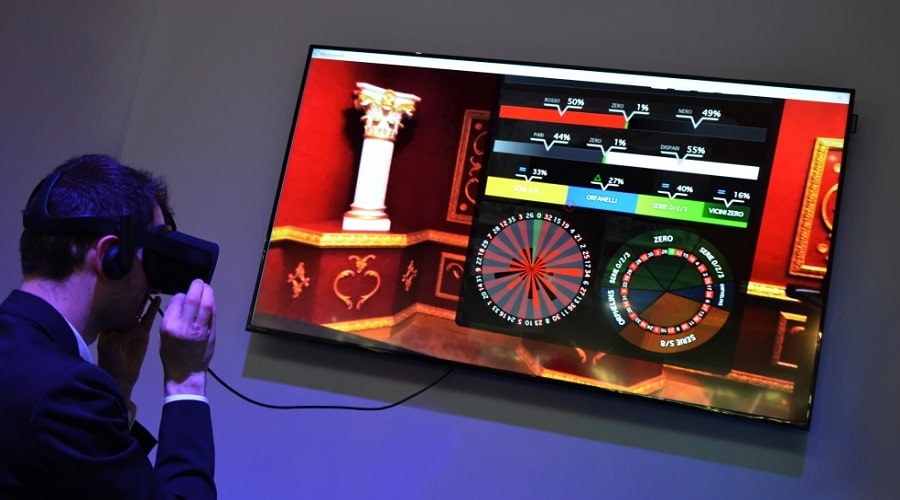
Technological breakthrough: VR roulette
Virtual Reality (VR) is the next frontier in casino gaming, and roulette is at its forefront. VR Roulette offers an immersive 3D environment where players don a headset and step into a virtual casino.
New Opportunities: Beyond visual immersion, VR Roulette offers a tactile experience. Players can “touch” the table, “feel” the chips, and interact more organically within the virtual space. Social interactions are enhanced as players can communicate with avatars of real players from around the globe.
Why is it Interesting? VR Roulette merges the best of both worlds—it retains the authenticity of live roulette while enhancing immersion to unparalleled levels. The game it envelops players, making them a part of its world.
Why is roulette called the queen of excitement?
Roulette’s charm lies in its simplicity and unpredictability. Each spin is a tale of chance, a dance with destiny. The anticipation as the ball flits and the euphoria or despair of its resting place make for a roller-coaster of emotions. Its legacy as a centerpiece in casinos, its association with glamour, high stakes, and cinematic moments, all contribute to its regal epithet. Despite technological advancements and changing gaming habits, roulette’s essence remains unchanged, making it perpetually enticing.
Conclusion
Roulette’s journey is a testament to its timeless appeal. From wooden wheels in dimly lit Parisian casinos to sophisticated live streams and immersive 3D environments, the game has continually adapted to new settings and technologies. Yet in every form, physical or digital, its essence remains unchanged: a game of pure chance shaped by anticipation, uncertainty, and the drama of where the ball will finally come to rest.
-
 Max Win Machine by Hacksaw Gaming: Classic Three-Reel M...
Max Win Machine is one of the most stripped-back Hacksaw …
-
 Quickspin in 2026: Mobile Design, Bonus Features and Mo...
Quickspin remains one of the recognisable Swedish names in online …
-
Roulette’s Evolution: From Casino Floors to Virtual Rea...
In the opulent world of casinos, few games have stood …